



في هذا المقال
Math Anxiety in Kids: 5 Simple Ways to Build Math Confidence
Is Your Child Afraid of Math? You’re Not Alone
Does your child freeze when it’s time to do math homework?
Do they say things like, “I’m bad at math,” or “I can’t do this”
?before they even try
Many parents believe their child simply isn’t good at math. In reality, many children aren’t struggling with math itself—they’re struggling with math anxiety.
Math anxiety is the feeling of worry or fear that appears before solving math problems. It can make even simple questions seem difficult. The good news is that confidence can be built step by step with the right support.
Here are five simple strategies that parents and teachers can start using today to help children feel more relaxed, more confident, and more successful in math.
1. Start with Easy Successes
Confidence grows when children experience success.
Instead of beginning with difficult questions, start with a few problems you know your child can solve correctly.
This creates a positive feeling before introducing more challenging work.
Small wins help children believe they are capable, and that confidence often carries into harder lessons.

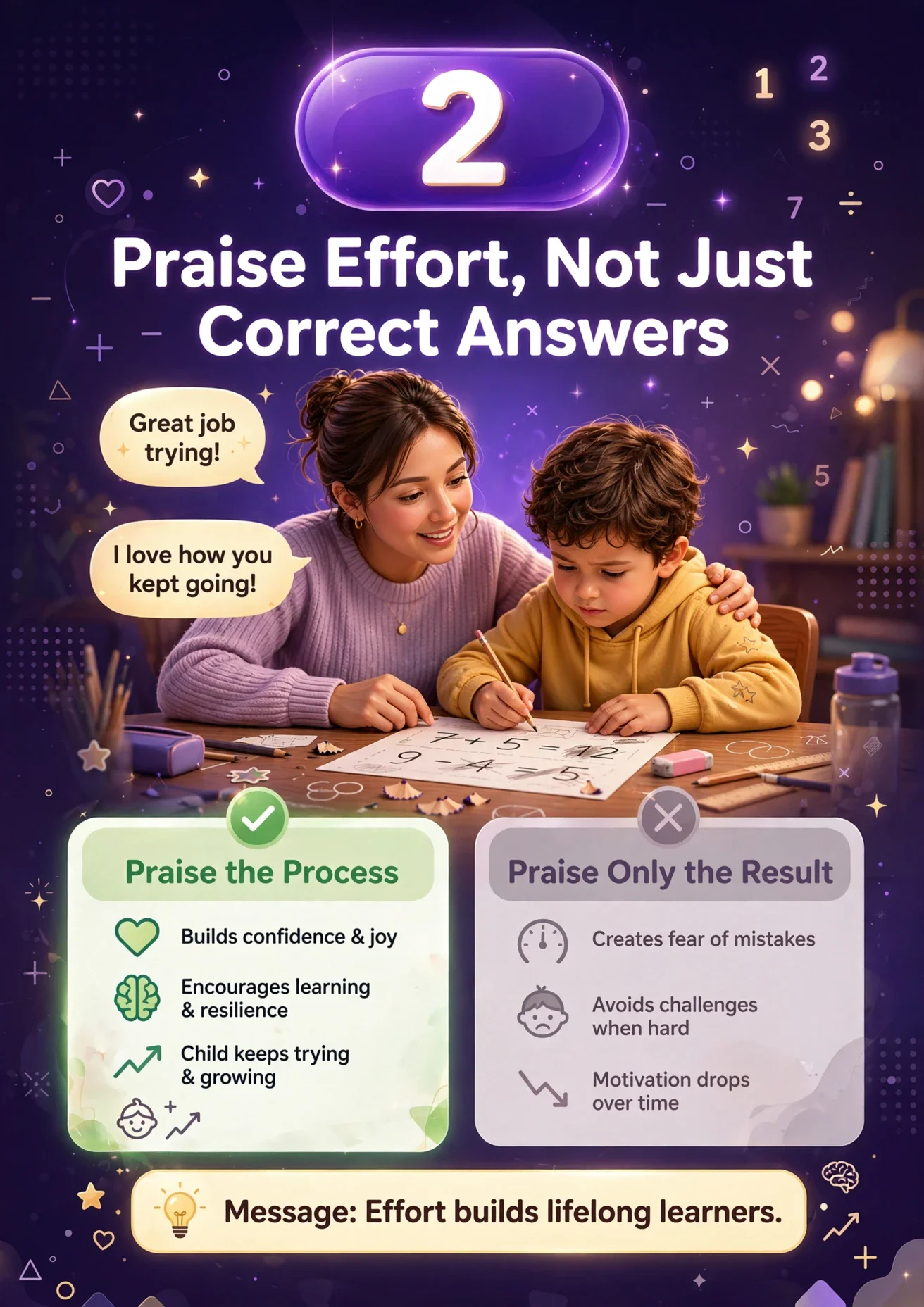
2. Praise Effort, Not Just Correct Answers
Children need to know that learning is more important than being perfect.
Instead of saying:
“You’re so smart.”
Try saying:
“I like how you kept trying.”
“You didn’t give up.”
“Your thinking is improving.”
When we praise effort, children become more willing to take risks and learn from mistakes instead of fearing them.
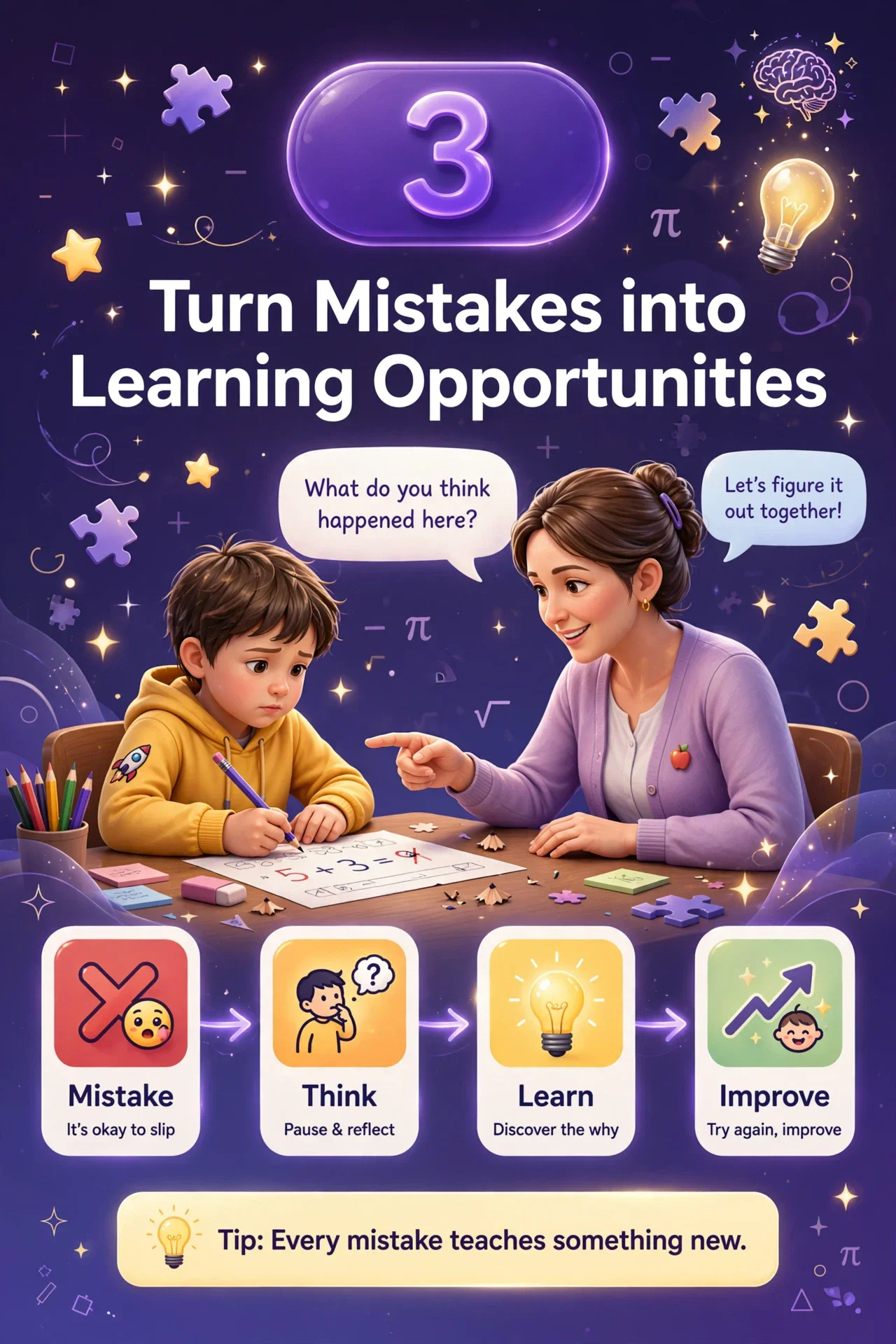
3. Turn Mistakes into Learning Opportunities
One mistake should never feel like failure.
When your child gets an answer wrong, stay calm and ask:
“?What made you choose that answer”
This simple question encourages thinking instead of embarrassment.
Children quickly learn that mistakes are normal and that every mistake teaches something new.
A relaxed learning environment helps reduce stress and builds stronger problem-solving skills.
4. Make Math Feel Like Play
Children naturally learn better when they enjoy the activity.
You don’t always need worksheets.
Try using:
- Dice games
- Number cards
- Building blocks
- Board games
- Printable math activities
Even ten minutes of playful math each day can improve confidence because children stop seeing math as something scary.

5. Celebrate Progress, Even Small Progress
Parents often focus on the final score.
Children, however, need encouragement during the journey.
Celebrate small improvements like:
- Solving one more question than yesterday.
- Finishing homework without giving up.
- Explaining their thinking clearly.
- Trying a new strategy.
These small moments remind children that learning happens one step at a time.
Over time, they begin to believe in themselves.

Why Building Math Confidence Matters
Children who feel confident are more willing to ask questions, try new strategies, and solve challenging problems.
They also develop important life skills such as persistence, logical thinking, and resilience.
Confidence doesn’t mean always getting the correct answer.
It means believing that mistakes are part of learning and that every challenge is an opportunity to improve.
Parents and teachers play a huge role in creating this positive mindset.
Sometimes a few encouraging words make a bigger difference than another page of exercises.
تابع جديد Math Nest
اختر إشعارات الموقع أو البريد أو الاثنين. الزائر يقدر يشترك ببريده دون تسجيل حساب.
الإبلاغ عن المقال
لو لاحظت مشكلة في المحتوى، أرسلها لفريق المراجعة. لن تظهر بياناتك لكاتب المقال أو للقراء.
تعذّر إرسال البلاغ الآن. حاول مرة أخرى لاحقًا.
سجّل الدخول لإرسال بلاغ
النقاش
التعليقات (0)
فكرة تضيفها، أو سؤال يفتح حوارًا.
الرجاء تسجيل الدخول لتتمكن من التعليق