

في هذا المقال
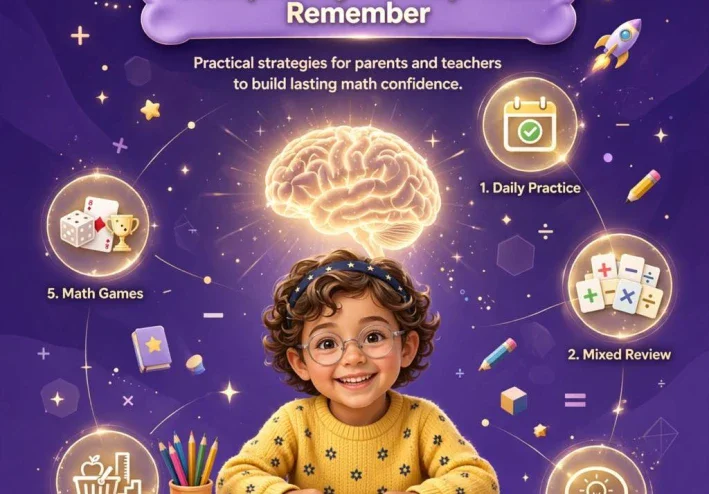
Why Kids Forget Math So Quickly? 5 Simple Ways to Help Them Remember
?Why Does My Child Forget Math So Fast
Have you ever helped your child solve a math problem perfectly, only to find they forgot the same lesson a few days later?
You’re not alone.
Many parents and teachers think children forget math because they aren’t paying attention. In reality, the problem is often how math is practiced, not how smart the child is.
Children remember information much better when they understand it, use it regularly, and connect it to real-life experiences. Instead of spending hours repeating worksheets, a few simple learning habits can make math stay in a child’s memory much longer.
Here are five practical strategies that can help children remember what they learn and enjoy math at the same time.
1. Practice a Little Every Day
Long study sessions can quickly become overwhelming for young learners.
Instead of asking a child to practice for an hour once a week, try spending 10 to 15 minutes each day reviewing previous lessons.
Short daily practice helps the brain strengthen memory little by little, making math skills easier to recall over time.
Consistency is more powerful than studying for long periods once in a while.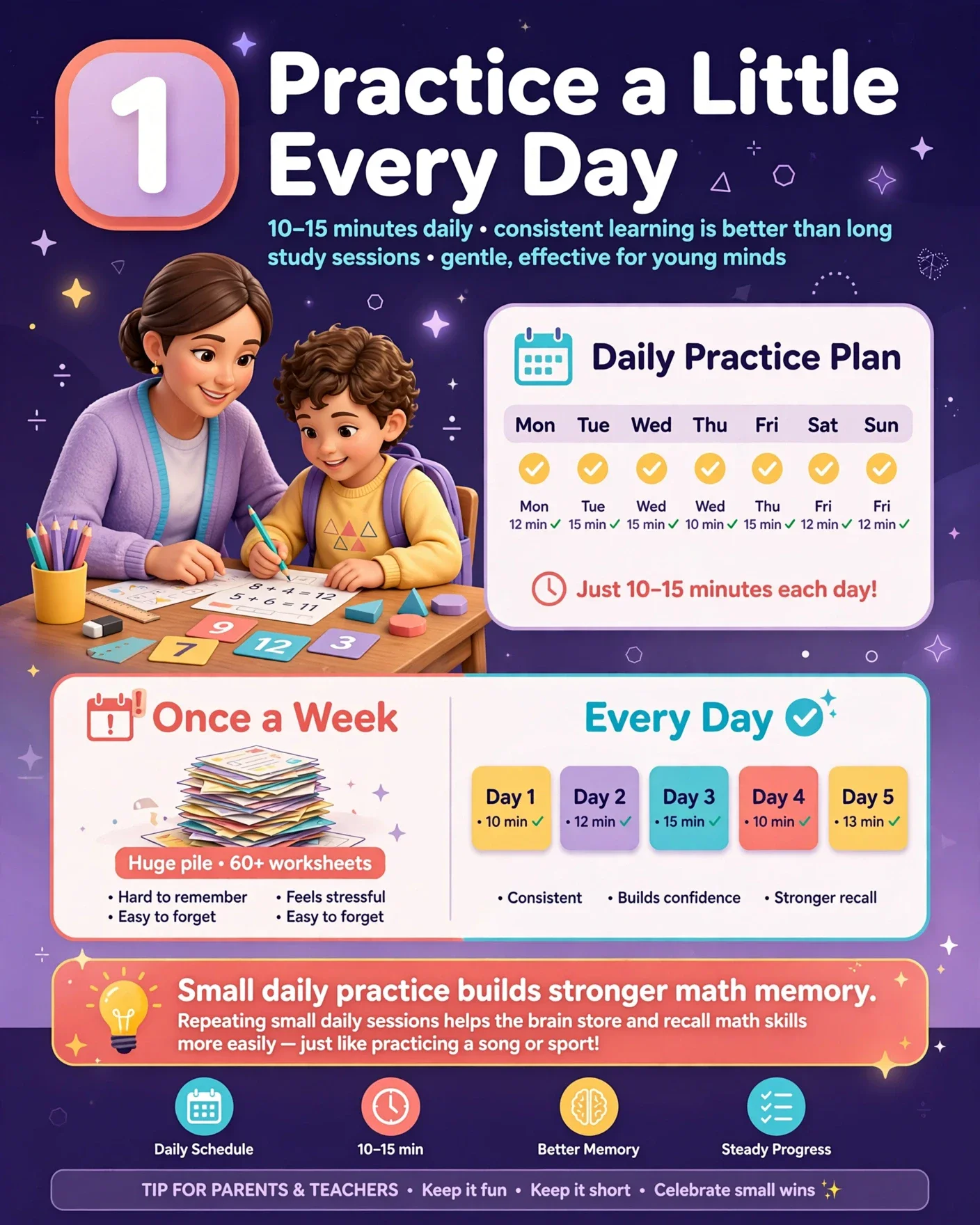
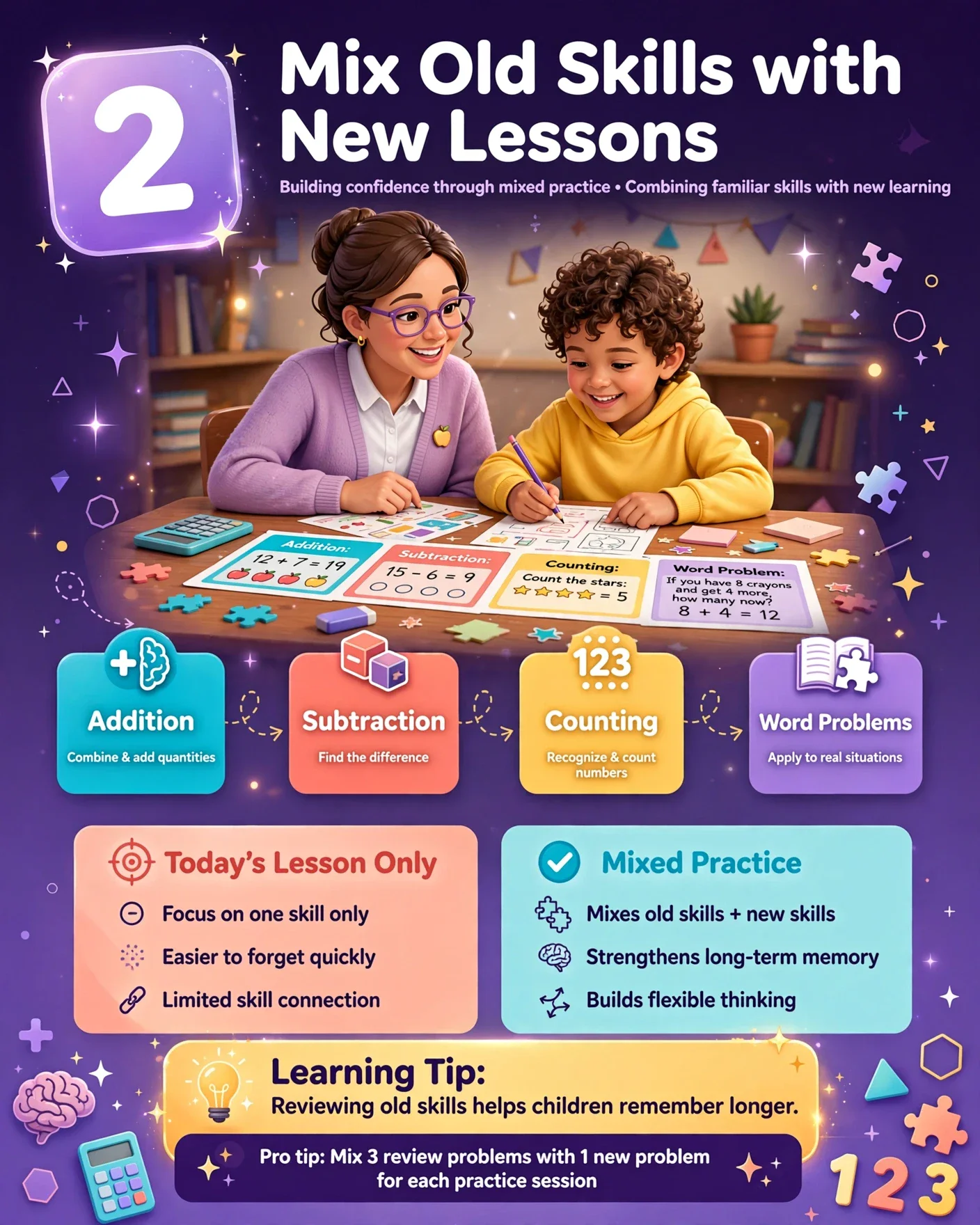
2. Mix Old Skills with New Lessons
Many children only review today’s lesson and completely forget yesterday’s.
A better approach is to mix different types of questions together.
For example, if today’s lesson is subtraction, include one addition question, one counting activity, and one simple word problem.
This gentle review reminds the brain that older skills are still important.
It also prepares children to use different math skills together when solving real problems.
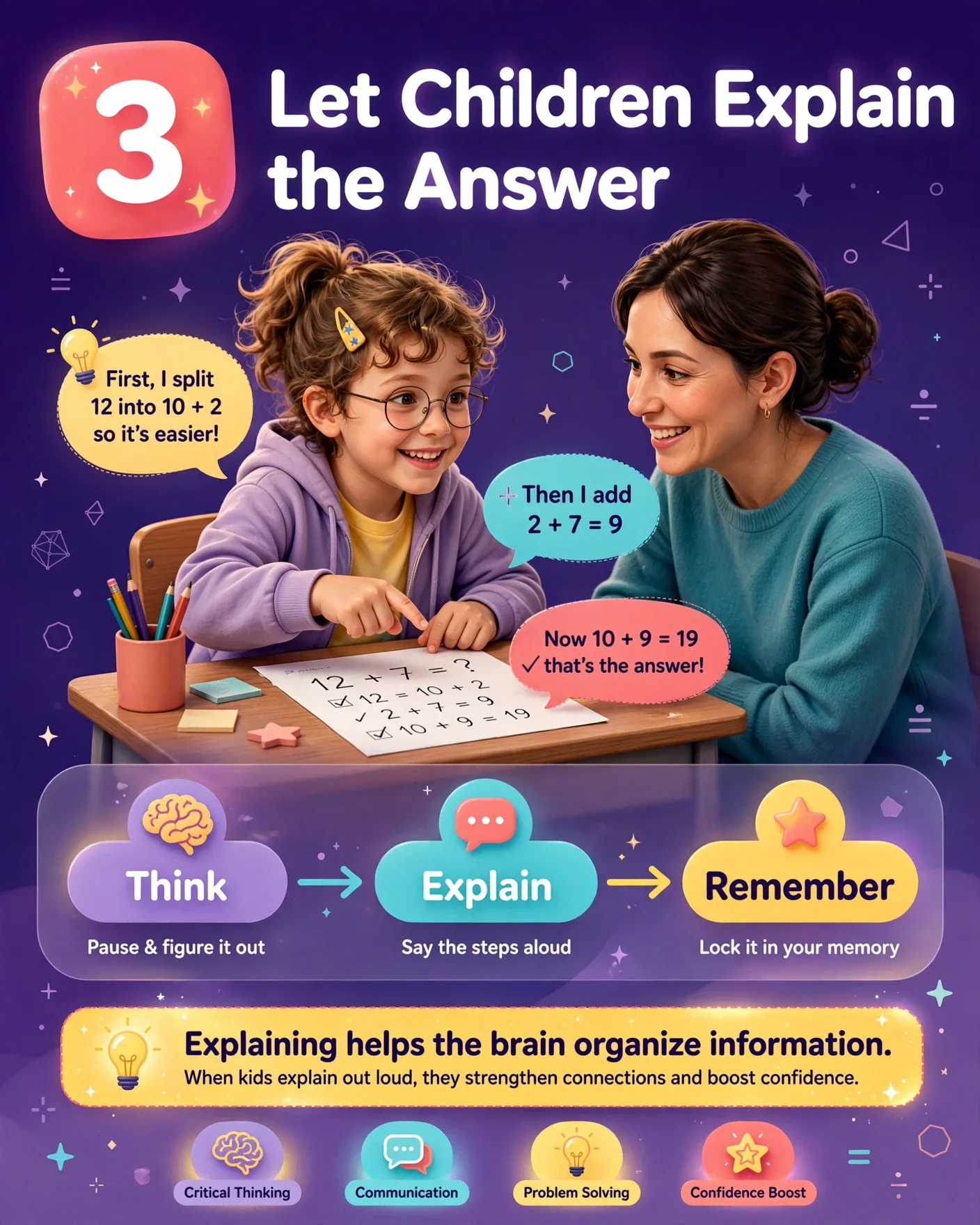
3. Let Children Explain the Answer
One of the easiest ways to improve memory is to ask a simple question:
“?Can you explain how you solved it”
When children explain their thinking, they organize the information in their minds instead of simply copying an answer.
Whether they’re talking to a parent, teacher, brother, or sister, teaching someone else helps strengthen understanding and makes the lesson easier to remember.
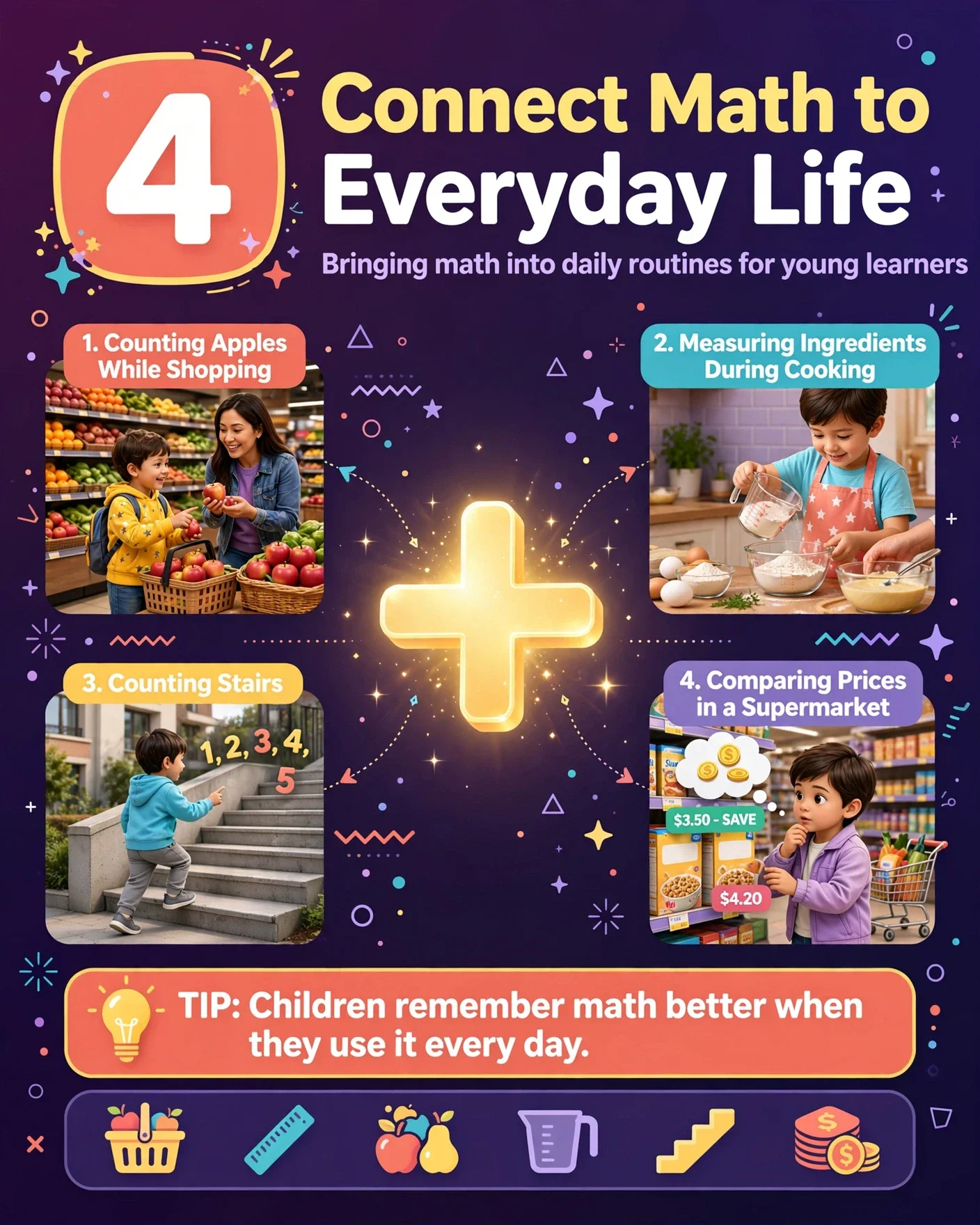
4. Connect Math to Everyday Life
Children remember experiences better than isolated facts.
Look for simple math opportunities during the day.
Count fruit while shopping.
Measure ingredients while cooking.
Compare prices at the supermarket.
Count stairs while walking upstairs.
These everyday activities show children that math isn’t only something they see in school—it is part of daily life.
The more often they use math naturally, the longer they remember it.
5. Make Review Fun with Games
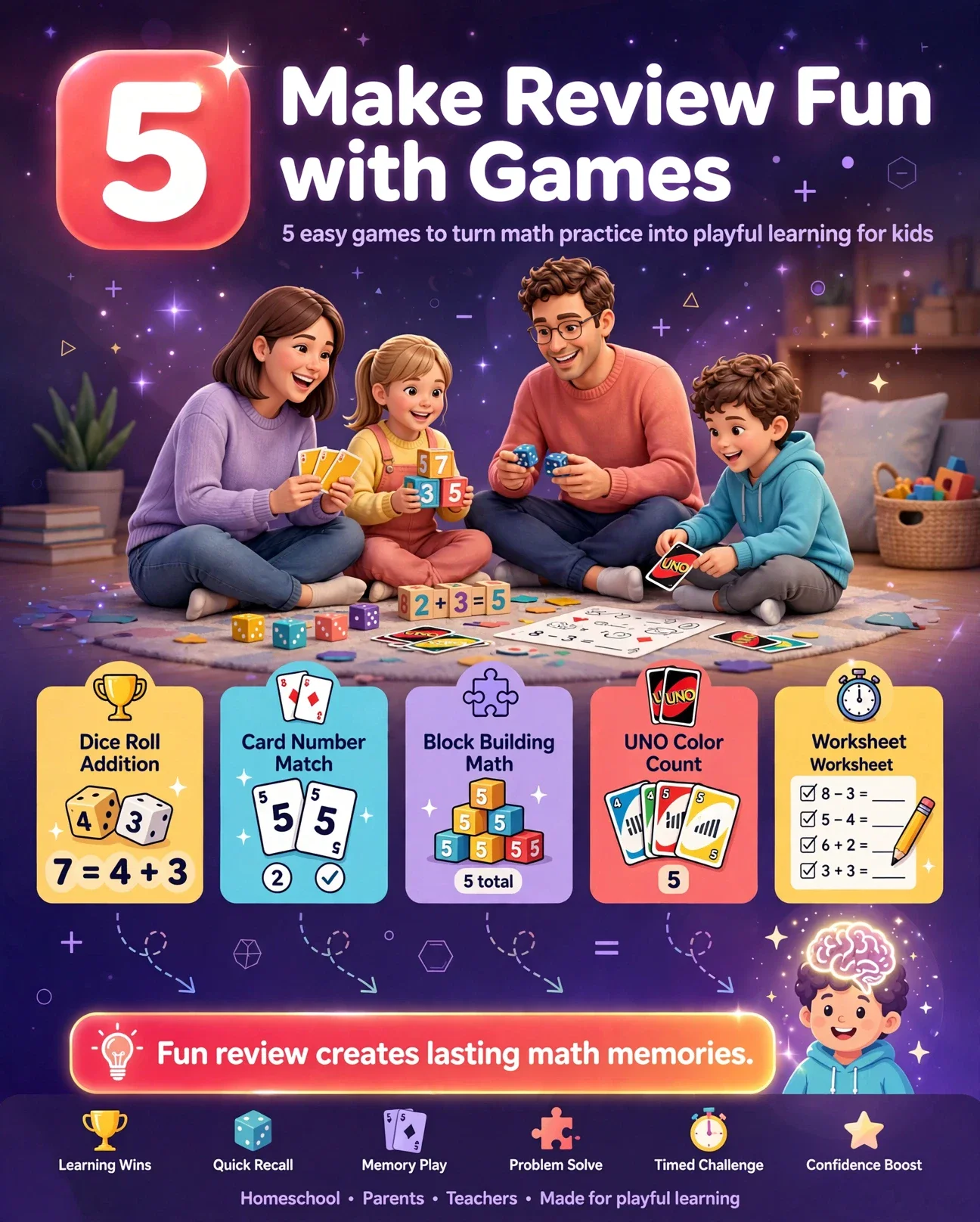
Review doesn’t always need to look like homework.
Simple games keep children engaged while reinforcing important skills.
You can:
- Roll dice and add the numbers.
- Play quick card games.
- Use printable math worksheets.
- Create small family math challenges.
When learning feels enjoyable, children are more willing to practice, and regular practice helps information stay in long-term memory.
Why These Strategies Really Work
Children don’t learn math by memorizing pages of numbers.
They learn by seeing, doing, explaining, and using math again and again in different situations.
These five strategies build stronger number sense, improve confidence, and reduce frustration because children truly understand what they’re learning instead of trying to memorize it for one day.
Parents and teachers often notice that children become more independent and make fewer mistakes after practicing this way for just a few weeks.
Final Thoughts
Helping children remember math doesn’t require expensive programs or extra tutoring.
Simple daily practice, regular review, meaningful conversations, real-life activities, and fun games can make a remarkable difference.
The goal isn’t simply to help children pass the next test.
The real goal is to help them build math skills they can remember, understand, and use with confidence for years to come.
If your child often forgets math lessons, start by trying just one of these strategies today. Small daily habits can lead to lasting learning and a much more confident young mathematician.
تابع جديد Math Nest
اختر إشعارات الموقع أو البريد أو الاثنين. الزائر يقدر يشترك ببريده دون تسجيل حساب.
الإبلاغ عن المقال
لو لاحظت مشكلة في المحتوى، أرسلها لفريق المراجعة. لن تظهر بياناتك لكاتب المقال أو للقراء.
تعذّر إرسال البلاغ الآن. حاول مرة أخرى لاحقًا.
سجّل الدخول لإرسال بلاغ
النقاش
التعليقات (0)
فكرة تضيفها، أو سؤال يفتح حوارًا.
الرجاء تسجيل الدخول لتتمكن من التعليق