
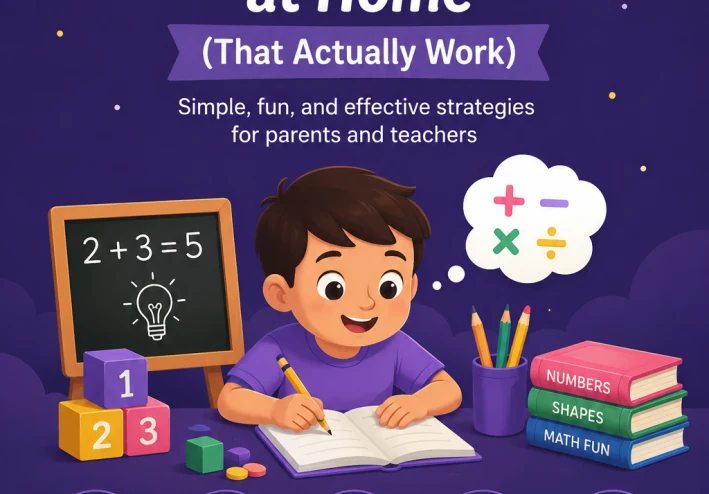

5Easy Ways to Help Kids Enjoy Math at Home and in the Classroom
Make Math Simple, Fun, and Meaningful
Many children think math is difficult because they are asked to memorize rules before they truly understand them. As a math teacher, I have noticed that children learn much faster when math feels like a game or part of everyday life instead of another school subject.
The good news is that helping a child succeed in math doesn’t require expensive learning materials or long study sessions. Small changes in the way we teach can make a huge difference.
Here are five simple strategies that parents and teachers can start using today.
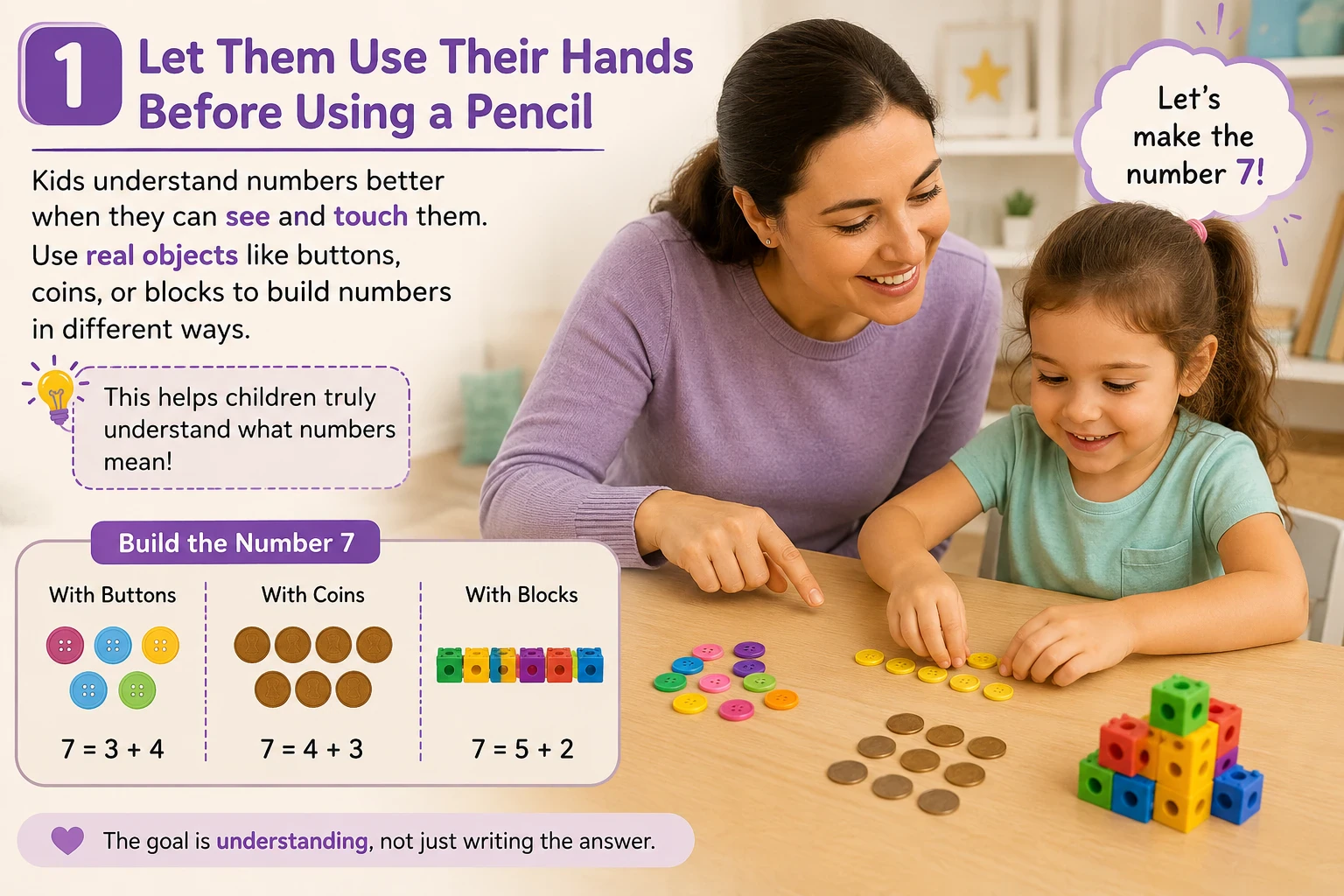
1. Let Children Explore Numbers with Real Objects
Before asking children to solve problems on paper, give them something they can touch.
Use blocks, coins, buttons, bottle caps, or even pieces of pasta to build numbers. For example, ask them to show the number 8 using different groups of objects.
This hands-on activity helps children understand what numbers actually represent instead of simply memorizing them.
When children can see and touch numbers, they build
2. Turn Math Questions into Everyday Stories
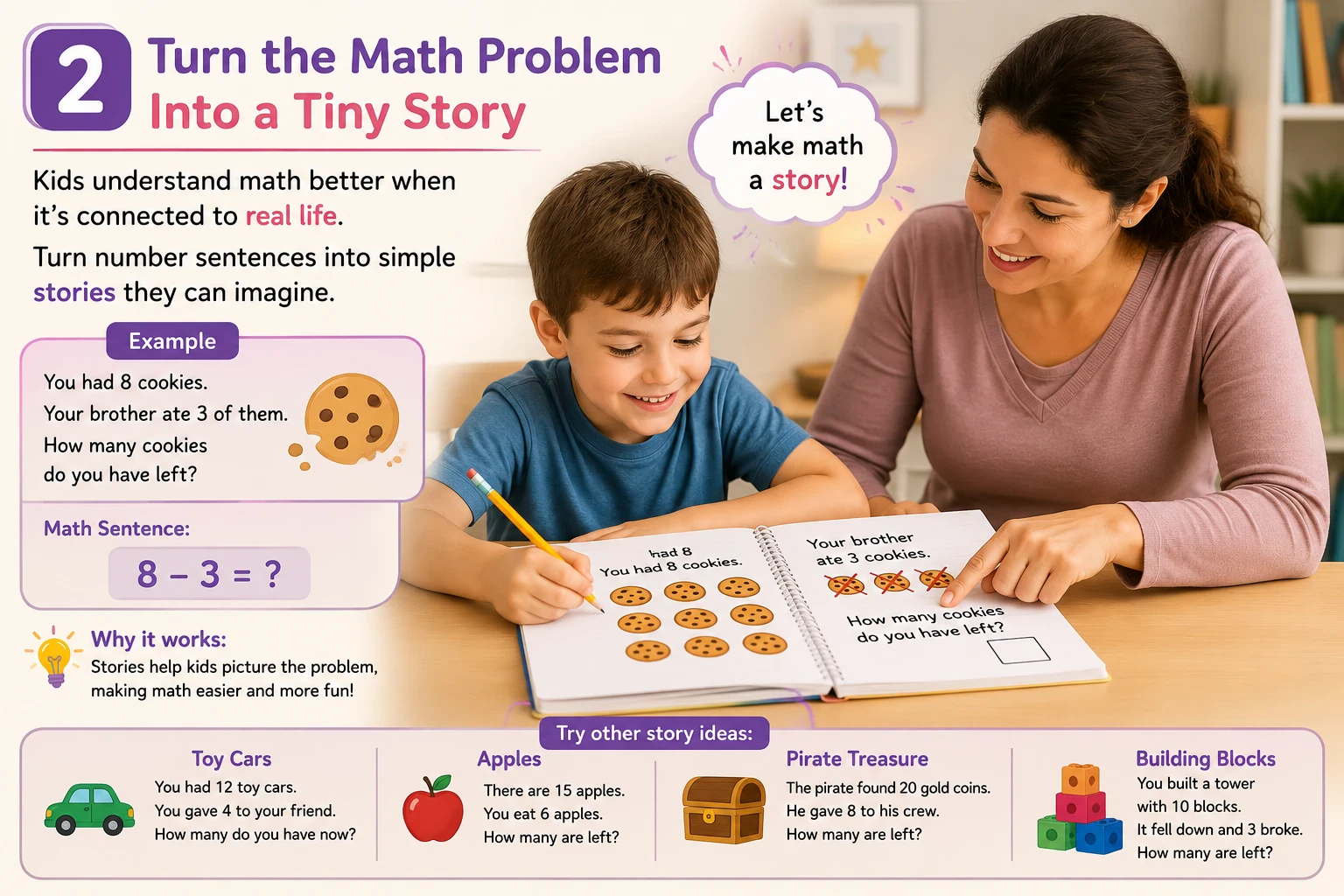
Children enjoy solving problems when they feel connected to them.
Instead of saying:
?=4_9
Try asking:“You had 9 balloons, and 4 floated away. How
"?many balloons are left
Simple stories help children imagine the situation, making subtraction, addition, multiplication, and division much easier to understand.
Parents and teachers can create these stories using toys, food, animals, sports, or anything the child enjoys.
3. Practice Math Through Fun Games
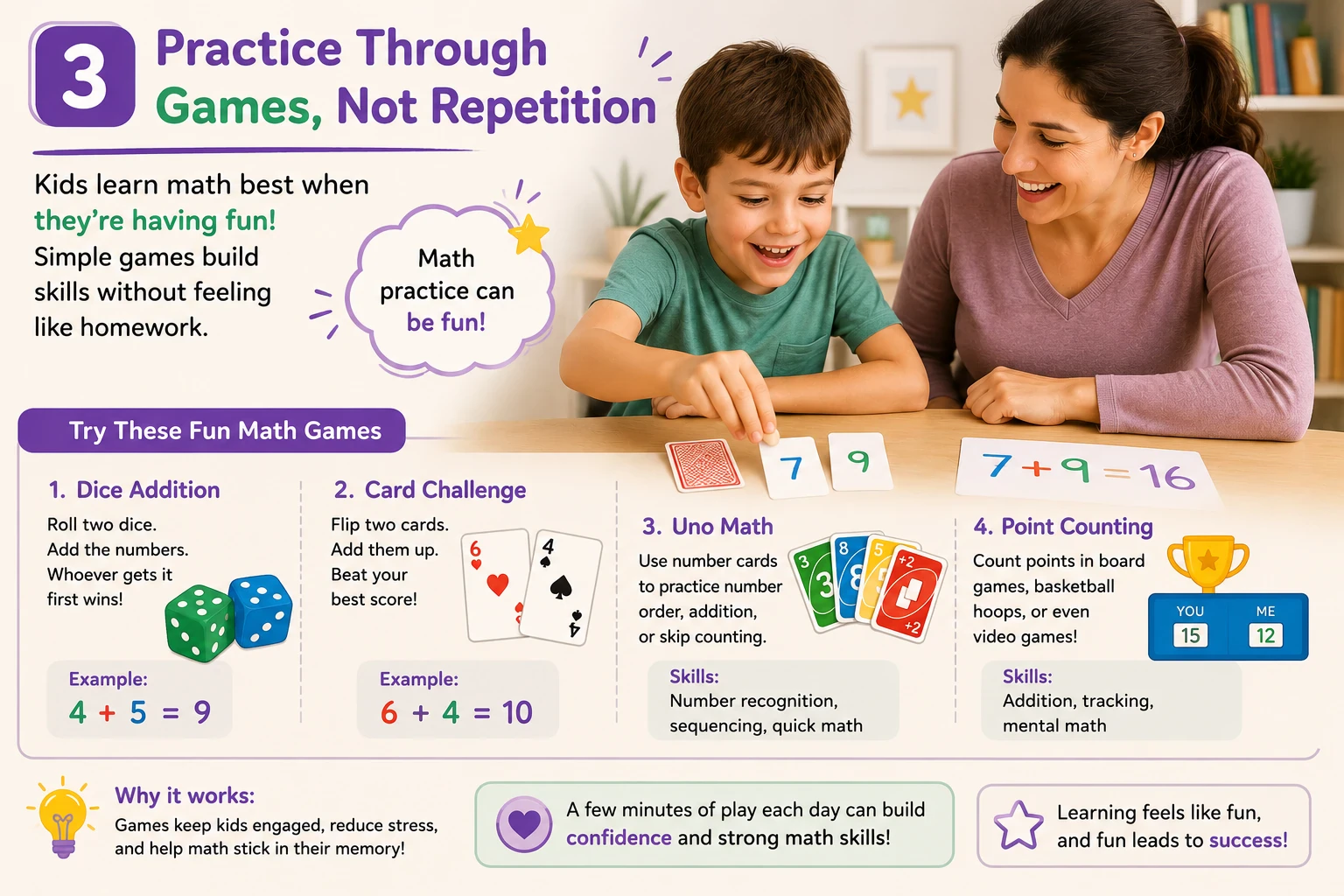
Practice is important, but it doesn’t have to feel like homework.
You can improve math skills by playing simple games such as:
- Rolling two dice and adding the numbers.
- Using playing cards for quick addition challenges.
- Counting points during family games.
- Playing number matching games.
Learning through play keeps children interested and encourages them to practice without feeling pressured.
4. Encourage Children to Explain Their Thinking
When a child gives the wrong answer, avoid correcting them immediately.
Instead, ask questions like:
- “?How did you find that answer”
- “?Can you explain your thinking”
Often, children discover their own mistakes while explaining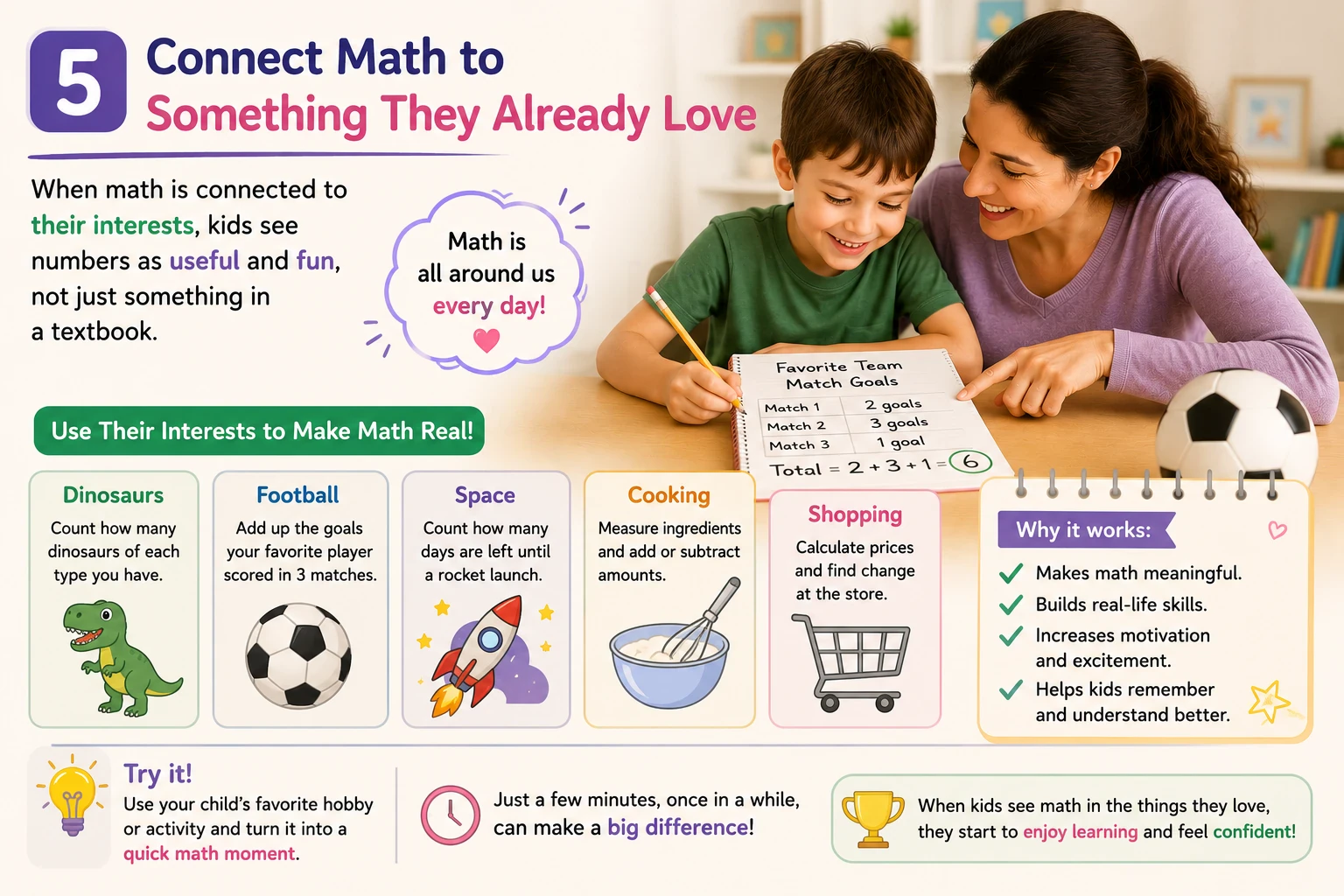 .
.
This simple habit improves problem-solving skills, builds confidence, and helps parents and teachers understand exactly where the child needs support.
Remember, mistakes are part of learning.
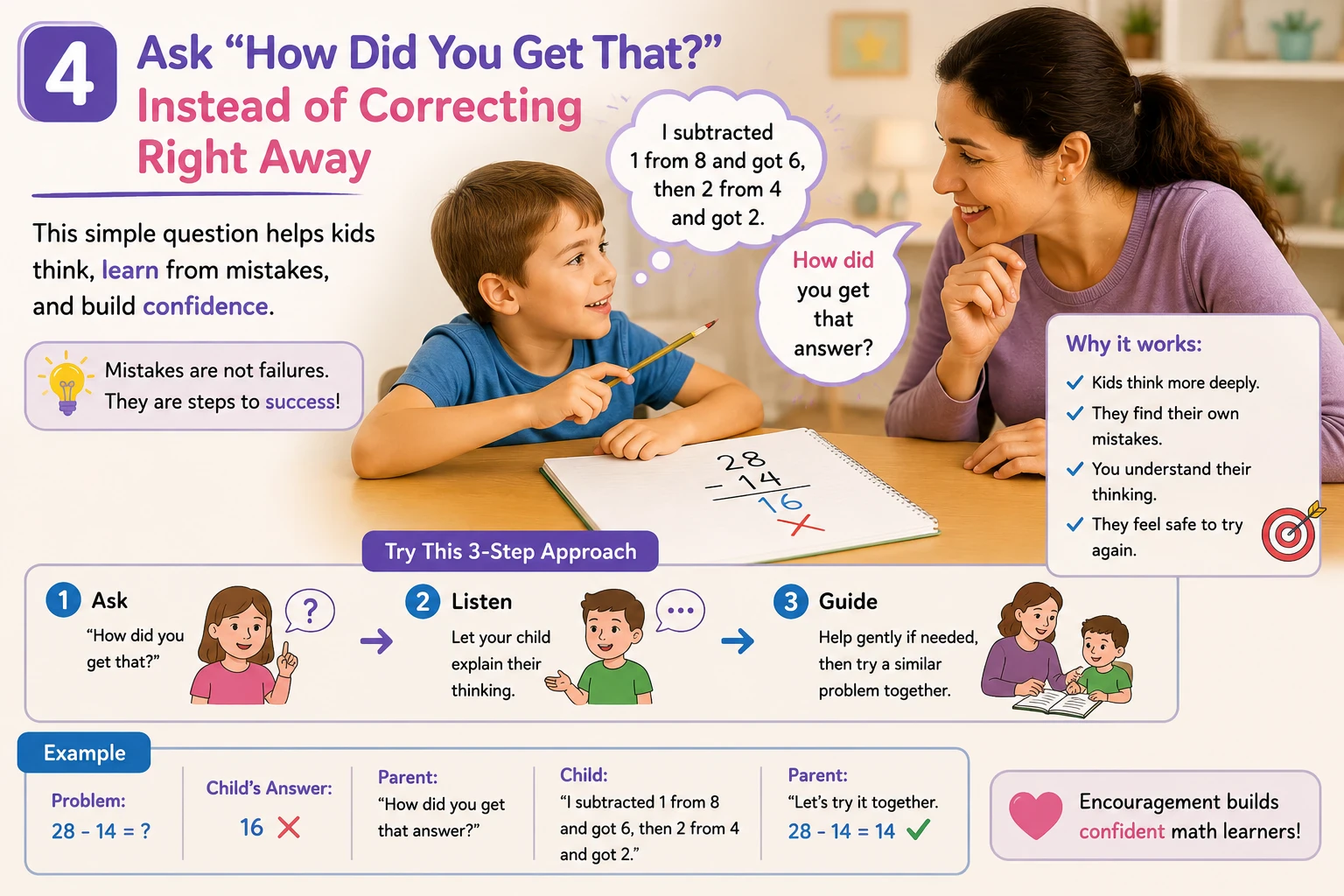
5. Connect Math with Your Child’s Interests
Every child has something they love.
If they enjoy football, count goals or compare scores.
If they like cooking, measure ingredients together.
If they enjoy shopping, let them calculate prices or count change.
When math becomes part of everyday activities, children begin to understand that numbers are useful everywhere—not just inside a textbook.
Why These Strategies Work
These five ideas encourage children to think instead of memorize.
They help develop:
- Number sense
- Logical thinking
- Problem-solving skills
- Confidence in mathematics
- Positive learning habits
Whether you’re a parent helping with homework or a teacher looking for better classroom engagement, these simple methods can make math more enjoyable and effective.
Final Thoughts
Teaching math doesn’t have to be stressful.
By using real objects, telling simple stories, learning through games, encouraging children to explain their thinking, and connecting math to everyday life, we create an environment where children enjoy learning instead of fearing it.
Even spending just 15 minutes each day using these ideas can improve both understanding and confidence.
The goal isn’t only better grades—it’s helping children become curious, independent thinkers who see math as a useful life skill.
To reinforce these activities, you can also use printable math worksheets that give children extra practice while keeping learning fun and engaging.